
![[Your Name Here] Logo White](assets/img/logo/Logo-white.png)
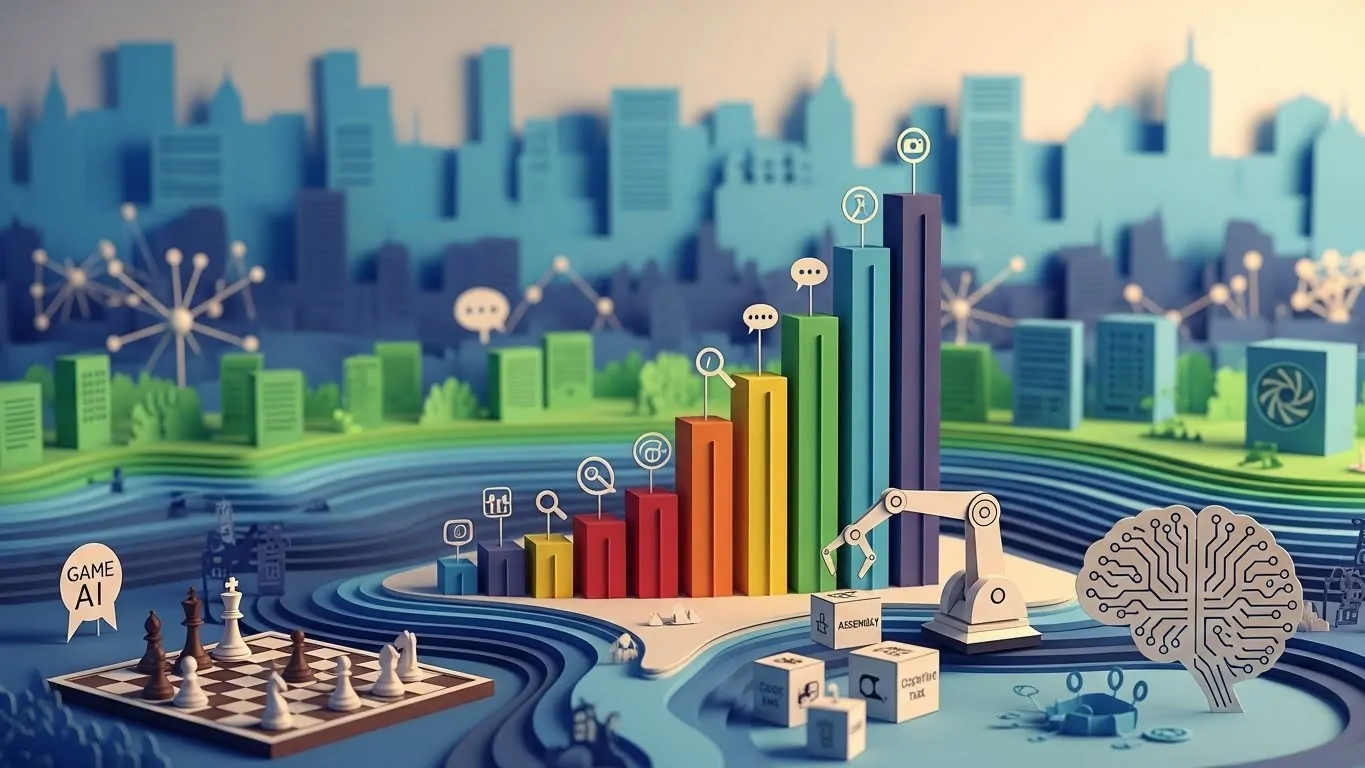
We are drowning in bar charts. Every week a new open-source model drops. The marketing team claims it beats GPT-4 on the MMLU. They say it has higher reasoning scores on HumanEval. But when you actually open your terminal and try to use it for a real task, it fails. It refuses simple requests. It hallucinates libraries that do not exist. It formats the JSON incorrectly. This gap between the chart and reality is why developers are moving away from standardized testing and towards the "Vibes Test."
“Benchmarks measure how well a student takes a test. Vibes measure how well a colleague does the job. In the real world, I need a colleague, not a test-taker.”
The problem is simple. Goodhart's Law states that when a measure becomes a target, it ceases to be a good measure. AI labs are optimizing their models specifically to ace these exams. They include the test questions in the training data. This leads to models that are technically smart but practically useless.
"Vibes" is a slang term for User Experience (UX) applied to intelligence. It measures the friction between your intent and the model's output. A model with good vibes "gets it" on the first try. It understands implicit context. It does not lecture you. It does not lazy-load the code with comments like "insert logic here." It behaves like a senior engineer who anticipates your needs.
There is currently only one benchmark that actually matters. It is the LMSYS Chatbot Arena. This is a blind A/B test system. It shows a user two models with the names hidden. The user prompts both. The user picks the winner.
This results in an "Elo rating" similar to chess rankings. It captures the nuance of human preference that static code tests miss. It captures the vibes. Interestingly, models that score lower on math tests often rank higher here because they are simply more pleasant and helpful to talk to.
Another area where benchmarks lie is the context window. Marketing materials promise "1 Million Tokens" of recall. They claim you can paste an entire novel and ask a question about the last sentence. In practice, many models suffer from the "Lost in the Middle" phenomenon.
They remember the beginning prompt. They remember the most recent prompt. They forget everything in the middle. A benchmark might say the model has 99% recall accuracy. But your vibe check will reveal that it loses the thread of a complex coding refactor after just five turns. Trust the feeling of the conversation over the spec sheet.
We are entering an era of AI subjectivism. The "best" model is no longer the one with the highest number on a leaderboard. It is the one that fits your specific workflow.
Stop looking at the graphs. Open the playground. Paste your messiest, ugliest code snippet. Ask the model to fix it. If it lectures you, close the tab. If it fixes it and adds a helpful comment, keep it. That is the only test that counts.





Web developer by trade, writer by passion, and data analyst by curiosity. I spend my downtime benchmarking the latest AI models, analyzing their evolution and dissecting how they are reshaping our future.