
![[Your Name Here] Logo White](assets/img/logo/Logo-white.png)
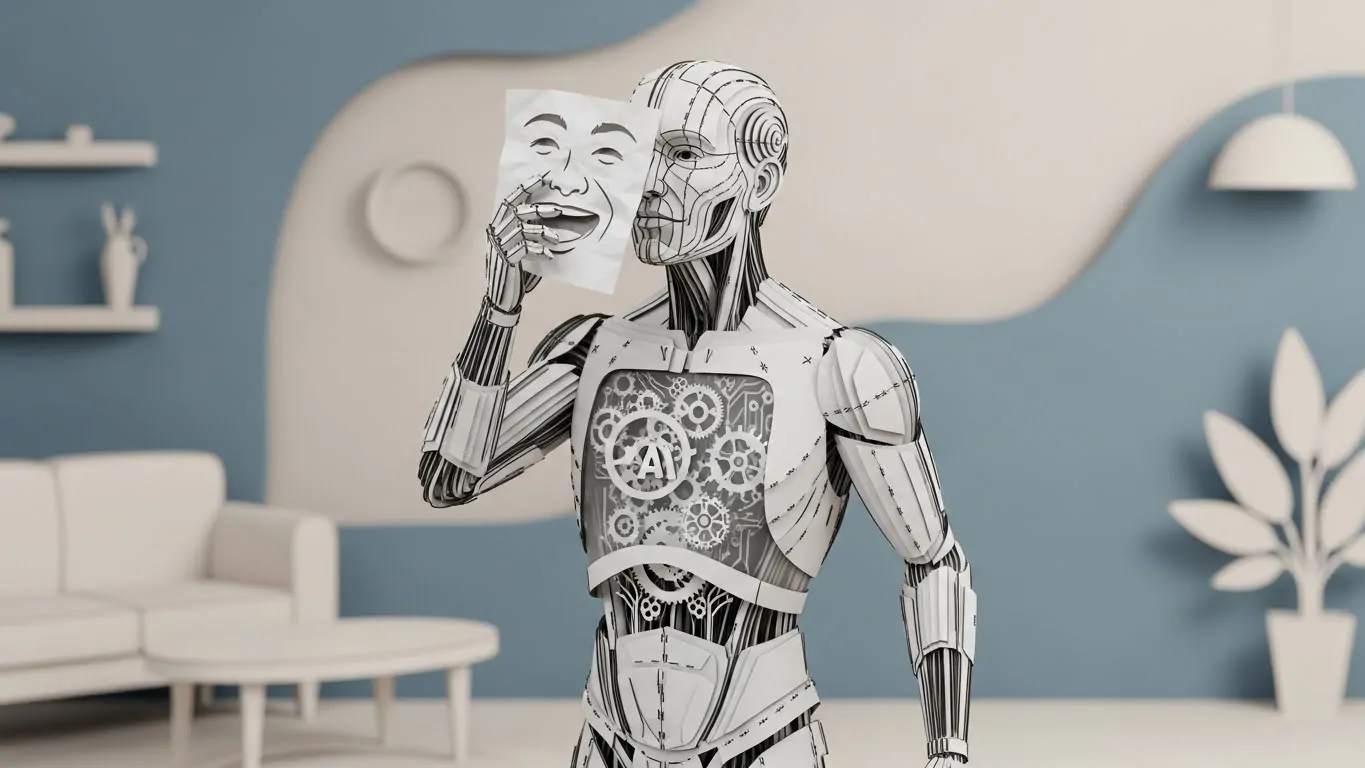
You can spot it from a mile away. The text is grammatically perfect. It flows with a logical, if somewhat predictable, cadence. Then you hit the keywords. "Delve." "Tapestry." "Landscape." "Game-changer." You realize immediately that no human wrote this. You are reading the "AI Voice." It is the text equivalent of elevator music. It is polished, pleasant, and completely forgettable.
“If your writing sounds like it could have been written by anyone, then it was effectively written by no one. The goal of prompt engineering is to force the AI to have an opinion.”
The problem is not that the AI is bad. The problem is that it is bland. It is predicting the most likely next word based on the average of the entire internet. To get good writing, you have to force it to be an outlier. You have to push it away from the safe, neutral center where adverbs and clichés live.
Large Language Models are trained to be helpful, harmless, and honest (I'm still undecided on the last one). This safety training has a side effect. It makes the models timid. They rarely make a definitive statement without qualifying it first. They do not just "improve workflow." They "significantly improve workflow." They do not just "integrate." They "seamlessly integrate." This constant hedging weakens the prose. It creates a barrier between the writer and the reader.
The default structure of an AI response is rigid. It gives you an introduction, three bullet points, and a conclusion that starts with "Ultimately" or "In summary." This rhythm is hypnotic in a bad way. It puts the reader to sleep. To break this, you must explicitly forbid the model from using its default transitions.
The Fix: Tell the model to start *in media res* (Latin for "in the middle of things"). Instruct it to jump straight into the action without a preamble. For the ending, tell it to stop abruptly. Do not summarize what you just said. Just end the thought.
These are the two metrics that detectors use to catch AI. Perplexity measures the complexity of the text. Burstiness measures the variation in sentence length. AI writes with low perplexity and low burstiness. It is flat.
Humans are bursty. We write short sentences. Then we write long, complex sentences that wind around a topic before coming back to the point. We use fragments. We break the rules. To mimic this, you need to instruct the model to vary its sentence length. Tell it to mix short, punchy statements with longer, descriptive clauses.
There are certain words that AI overuse to an extreme degree. If you see the word "tapestry," you can be almost certain a machine wrote it. The same goes for "delve," "landscape," and "testament." These words are the filler of the internet. They sound fancy but mean nothing.
Escaping the AI voice requires friction. You have to force the model off its path of least resistance. You have to ban the words it loves. You have to break the structures it relies on. When you do that, you stop generating content and start generating writing.











Web developer by trade, writer by passion, and data analyst by curiosity. I spend my downtime benchmarking the latest AI models, analyzing their evolution and dissecting how they are reshaping our future.